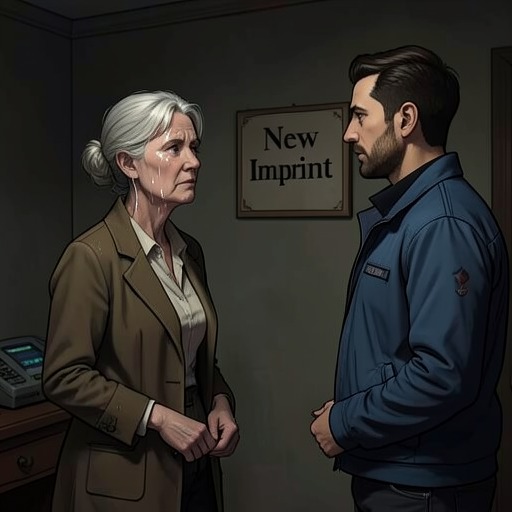
Napoleon Marconi
Nine Perfect StrangersNapoleon Marconi is a high-school teacher, husband to Heather Marconi, and father to Zoe Marconi and Zach Marconi. At Tranquillum House, his familiar decency and respect for rules coexist with a grief he has tried to master through study, advocacy, and service to other bereaved families. The retreat brings him back to the decision he replays as a possible turning point in Zach’s death, while forcing him to face what his wife and daughter have kept from him. His arc distinguishes the responsibility he can accept from the impossible task of undoing his son’s suicide.
Identity and Background
Napoleon first introduces himself to Frances with a beaming handshake and announces that he and his family are guests at the retreat. He presents Heather and Zoe as his wife and daughter, warmly calling them his beautiful girls. Their shared height makes them a conspicuous family, but his exuberant manner, rather than his appearance, establishes his social character: he readily approaches people and makes introductions.
He is a high-school geography teacher, and teaching has shaped the habits he carries into family life. When the retreat’s silence begins, he raises a finger to his lips, an automatic classroom gesture. Heather recognizes the familiar schoolteacher in him, formed over twenty-five years of teaching boys in a disadvantaged area. He also treats written rules as obligations of courtesy and social order. Even when Heather questions the retreat’s restrictions on eye contact, Napoleon follows them because the contract says to.
Family, Work, and the Retreat
The family’s decision to attend Tranquillum House grew out of practical concern as well as a wish for a peaceful break. After Napoleon received a free health assessment through his school, he learned that his cholesterol was high and his blood pressure was becoming concerning; the assessment recommended substantial dietary changes despite his exercise. Heather searched for health resorts, and Zoe had suggested the idea partly as a way to improve her father’s health. The retreat therefore begins as a family project, though it will become a setting for confronting a much deeper wound.
Napoleon’s willingness to follow the program’s requirements appears again when Masha explains that the wellness contract permits staff to search luggage and confiscate contraband. Asked whether anyone had read that clause, he raises his hand. The small gesture sets him apart from Tony’s protest and Heather’s exasperation: Napoleon has read the fine print and accepts that the rules apply, even when the retreat’s methods and restrictions become contentious.
At the retreat, the family’s loss surfaces in a poetry exercise. Napoleon recites lines from “Invictus,” a poem he associates with teaching young people that they can direct their own lives. He then explains that the next day will mark the third anniversary of Zach’s death by suicide. The poem’s language of mastery acquires a painful contradiction: Zach’s death cannot be made into evidence that he was simply in control of his fate, nor can Napoleon’s role as a teacher supply an answer to his loss. His disclosure stills the group and makes the anniversary an immediate presence in the retreat.
Grief and the Burden of the Missed Morning
Napoleon’s grief has taken the form of a sustained effort to understand suicide and support those left behind. After Zach’s funeral, he decided that he must not break: he needed to heal enough to be there for Heather and Zoe. He read research and books, listened to podcasts, attended a Tuesday-night Survivors of Suicide group, and eventually ran it. He also gave talks to parents and schools, took part in radio interviews, edited an online newsletter, and helped with fundraising. These activities are not a cure for his grief; they are the work he has built around it.
That work brings both purpose and friction into his marriage. Napoleon overhears Heather dismissing it as his new hobby, in a bitter tone he cannot forget. He recognizes the remark as both a malicious misrepresentation and an uncomfortable truth: this work has become a central occupation in his life. He knows he could search for hatred toward Heather, but believes a happy marriage depends on not looking for it. His restraint does not erase the hurt; it shows how carefully he tries to preserve their bond while carrying a private account of what has gone wrong between them.
At Tranquillum House, a memory of the morning Zach died explains why Napoleon’s service to other survivors cannot release him from self-blame. The preceding evening had been an ordinary, happy family time. Napoleon and Zach barbecued ribs, swam, talked about tennis and other subjects, played table tennis, and watched a film together. Napoleon was tired the next morning and hit snooze on his phone. He calls this a split-second decision he will regret for the rest of his life, and repeatedly imagines the alternative in which he turns off the alarm and gets out of bed. He has examined the memory again and again, like an investigator searching for evidence. The recollection shows the difference between what he knows and what he fears: he can identify the missed alarm, but the conviction that another choice would have saved Zach remains an imagined counterfactual, not something he can establish.
What He Can and Cannot Repair
During the retreat’s psychedelic experience, Zoe speaks of Zach as someone who would have found the family getting high together funny. Napoleon responds that Zach is there and addresses him as though he were present. For a moment, his vision restores the ordinary family life he longs for: Zach sits before him in familiar clothes, and it feels as if the family is together again. The episode gives grief a temporary image of reunion, but it does not change the fact of Zach’s death.
The experience also brings Napoleon into contact with the secrets Heather and Zoe have been carrying. He takes those secrets from them and sees their relief, but privately decides never to tell them how angry they have made him. His impulse is protective: he will bear his own reaction rather than add it to their burdens. Yet the decision creates another secret of his own, and the walls of the studio continue to pulse as Heather and Zoe hold his hands. His devotion is real, but so is the isolation produced by choosing silence instead of confronting their anger and pain together.
Zoe’s later reflection clarifies both the limits and the value of Napoleon’s role in the family. She sees him looking for a way out of the locked studio and thinks that he can fix anything if he is given the opportunity; what he was never given was the opportunity to fix Zach. The contrast separates a solvable crisis from the past he cannot revise. Zoe begins to loosen her own guilt and to imagine remembering not only the times she and Zach fought or kept secrets, but also their laughter and closeness. Napoleon’s care cannot restore his son, but his presence remains part of the family’s continuing attempt to live with loss.
Change and Narrative Significance
Napoleon’s story turns on the tension between his vocation to help and the limits of intervention. He teaches young people about agency, runs a support group, and repeatedly searches his own memory for the moment when a different action might have prevented Zach’s death. Those efforts express love and a refusal to abandon others, but they also show how grief can make an ordinary act—the tap of a thumb on an alarm—carry the weight of an entire alternate life.
The family’s silences and disclosures complicate his self-image as the person who must hold everyone together. He follows rules, protects Heather and Zoe from his anger, and believes he can repair what is placed before him; Zoe’s recognition that Zach was beyond his power marks the painful boundary of that belief. The novel does not resolve bereavement by making Napoleon’s work or the retreat undo the past. Instead, his story allows responsibility, love, resentment, and remembrance to coexist, with the possibility of healing grounded not in forgetting Zach but in remembering the fuller relationship they had with him.